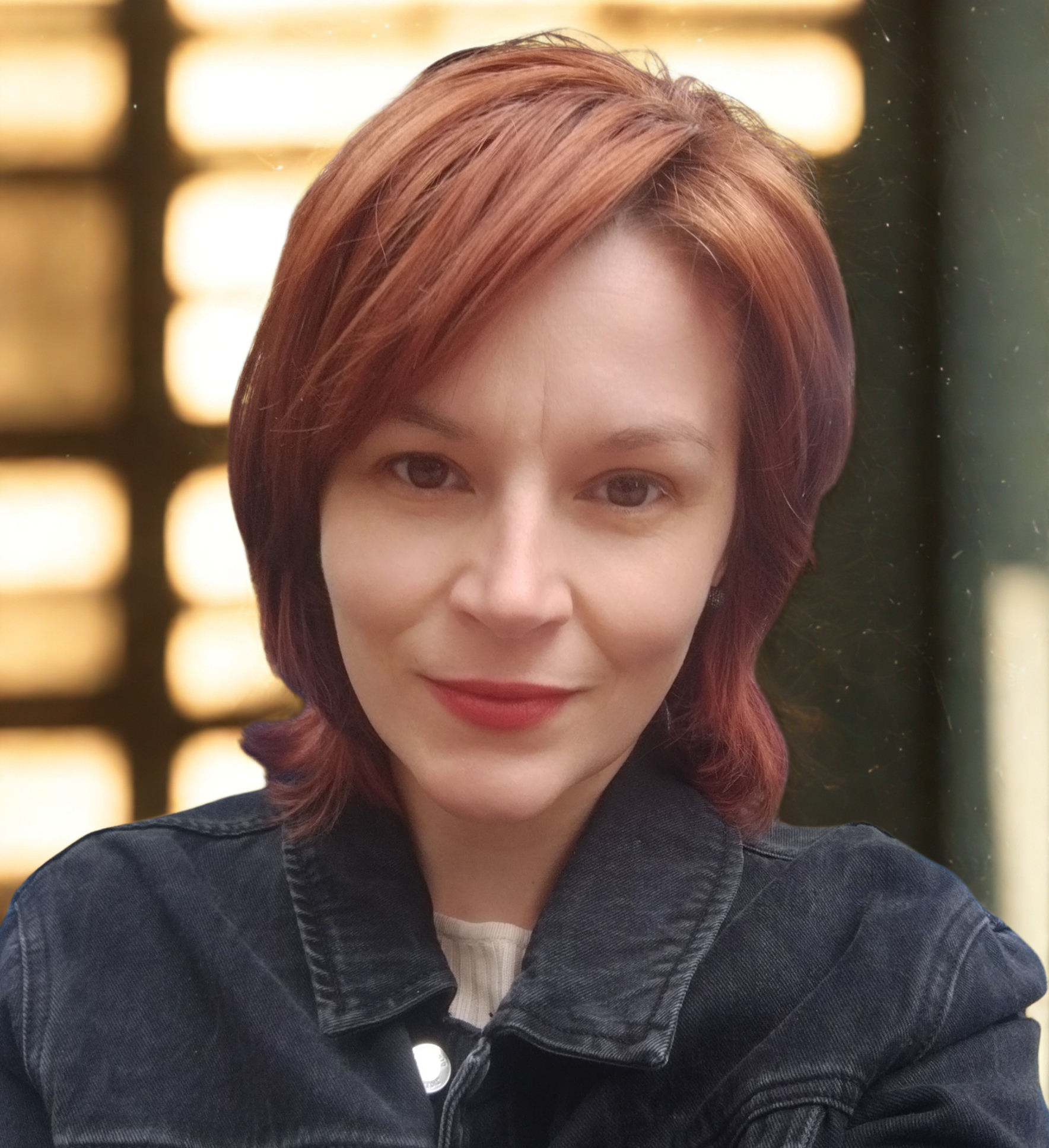
I did not set out to build a system.
I set out to understand — first myself, then the people who came to me, then the recurring question that would not leave me alone across every framework I studied, every tradition I practiced, every conversation I had with peers and specialists over years of disciplined inquiry: why do people who genuinely understand themselves still struggle to live coherently?
The Conscious Fractality System is my answer to that question. Built not in theory but in the uncompromising laboratory of real life — my own, and the lives of the people I have had the privilege of accompanying.
I have been asking the same question since I was a child — long before I had the language for it. What is actually happening beneath the surface of a human life?
It showed up first in mythology. I was drawn to the great stories — not for their drama but for what they knew about the inner life that more literal accounts could not touch. The hero's journey, the archetypal figures, the moment when a character encounters the pattern that has been shaping them all along — these were not entertainment to me. They were maps.
It showed up in literature and art. I was always drawn to the works that portrayed the human being at the limit between body and spirit — the place where what you can see and what is actually happening diverge most sharply. I found more psychology in those pages than in most psychology texts.
And it showed up, unexpectedly, in mathematics. In high school I encountered fractals — the Mandelbrot set, the principle that a single generating rule, applied recursively, produces infinite complexity that is self-similar across every scale. I did not know yet what that had to do with human beings. But something in me recognised it immediately as relevant. It would take another decade to understand why.
Before I tell you more about the system, I want to tell you about the person I built it for. Because I have met you — in many different forms — across many years of clinical and coaching work.
You are not someone who lacks self-awareness. You have probably read more about yourself than most people will in a lifetime. You may have been in therapy, done meaningful inner work, attended retreats, studied frameworks, practiced meditation or contemplative traditions. You are genuinely interested in understanding — not as a hobby, but as something that feels essential to living your life with integrity.
And yet. There is a gap. Between what you understand and how you actually live. Between the clarity you have in reflection and the patterns that return in your body, your relationships, your work, your inner life — as if something beneath the surface has not received the memo.
That gap is not a failure of effort or intelligence. It is a failure of precision. And it is exactly what I built the Conscious Fractality System to address.
I did not arrive at this system by choosing it from a menu of available frameworks. It assembled itself over a lifetime of following what I could not put down.
My academic training was in political science — which taught me to read systems, to find the structural dynamic beneath what appears on the surface, to ask not only what is happening but what is generating what is happening. That analytical rigour became the scaffold of everything that followed. But something in the purely academic frame kept falling short of the territory I was most interested in. The depth required more than analysis could reach.
So I kept following the thread. TCM — Traditional Chinese Medicine — introduced me to the Five Element framework and changed everything. Here was a system that described the human being not as a collection of symptoms but as a constitutional pattern — an elemental grammar that expressed itself simultaneously in the body, the emotions, the psychology, and the life. The body as the primary diagnostic field. I had never encountered anything more precise.
Jungian coaching deepened the archetypal dimension. Mian Xiang — Chinese face reading — added another layer of constitutional intelligence. An extended, disciplined self-training in spiritual and contemplative traditions across multiple lineages gave me the contemplative ground without which the intellectual framework would remain merely intellectual.
And through all of it, an ongoing dialogue — with peers, with specialists, with the people who came to me as clients — testing every claim against the resistance of actual human experience. The system did not emerge from theory. It emerged from contact.
I want to be honest with you about something that no professional biography usually includes — because I believe it is the most important thing I can tell you.
I am a mother of four children. I live the ordinary, demanding, sometimes beautiful and sometimes exhausting life of a family. And I have spent years applying to myself, with the same rigour I bring to my clinical and coaching work, every framework I have ever studied. Not as a performance of self-development — but as a genuine, sometimes uncomfortable, ongoing commitment to not teaching what I have not lived.
That has been the most demanding formation of all. The frameworks that survived the ordinary are the ones that made it into the system. The ones that looked good in theory and collapsed under the pressure of a difficult morning, a challenging relationship, or the kind of fatigue that no amount of mindfulness seems to reach — those I discarded.
What remains is what actually works in a real life. Not a life that has been optimised for spiritual development — a life that is ordinary, complex, relational, embodied, and sometimes messy. Exactly like yours.
This is what I want for you — not in the abstract, but as a specific, achievable shift that I have seen happen in people who engaged with this system seriously.
I want you to find the single generating pattern beneath the recurring difficulties in your life — and to see it, perhaps for the first time, operating at every scale simultaneously: in your body, your emotions, your relationships, your life story, your sense of purpose, your creative blocks, your contemplative experience. All at once. Named with precision.
That moment of recognition — I have witnessed it enough times to know that it is different in quality from all the self-knowledge that preceded it. It is not intellectual. It arrives in the body. And it changes the relationship to the pattern in a way that understanding the pattern alone never quite managed.
Beyond that moment, I want you to have a complete cultivation architecture — a precise, personalised, practice-based framework for developing the coherence that every framework you have encountered so far has promised and approached but not quite delivered.
Not because the other frameworks were wrong. But because they were each illuminating one face of something that has many — and you need to see the whole.
After years of clinical work, coaching, and the ongoing conversation with myself and with the people who have trusted me with their inner life, I have learned to recognise certain patterns with a precision that still sometimes surprises me.
I can see the same elemental dynamic running through a person's body, their emotional life, their relationships, and the recurring themes of their story — all at once, before they have finished describing any one of them. Not because I am exceptional at pattern recognition, but because the patterns are genuinely self-similar across scales. The fractal principle is not a metaphor. It is what is actually happening.
I have sat with people who had been in therapy for years, who understood their patterns in considerable depth, and watched the specific quality of recognition that arrives when the generating rule is named — not described, not explained, but named — at the right level of structural precision. It is a different quality of experience from intellectual understanding. It settles in the body. And from that settling, something becomes possible that was not possible from understanding alone.
Then you already know, in the way that knowing happens before analysis,
that this is worth continuing. Start where the recognition
is strongest. The assessments are the first precise encounter
with the system — each one a different entry point into the same territory.
Or come directly, if you are ready to do the work with guidance.
I am here. And I built this — for you.